Year 3
Summer 2, 2026
Update 1:
Science
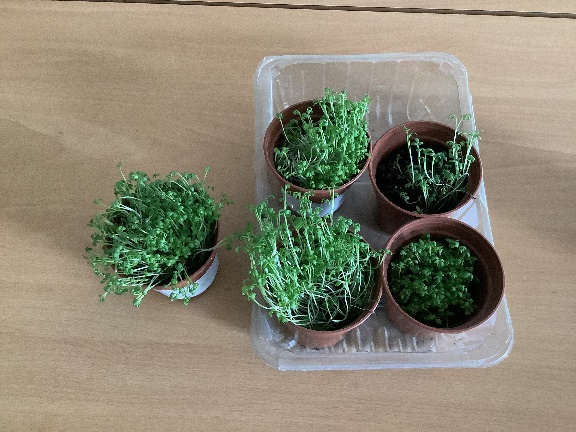
Our topic this half term is plants. To help us understand what a plant needs to survive, we conducted an investigation to explore whether cress could survive without either: water, light, air, soil or the right temperature. We enjoyed monitoring how our cress was getting on and drawing together our findings.
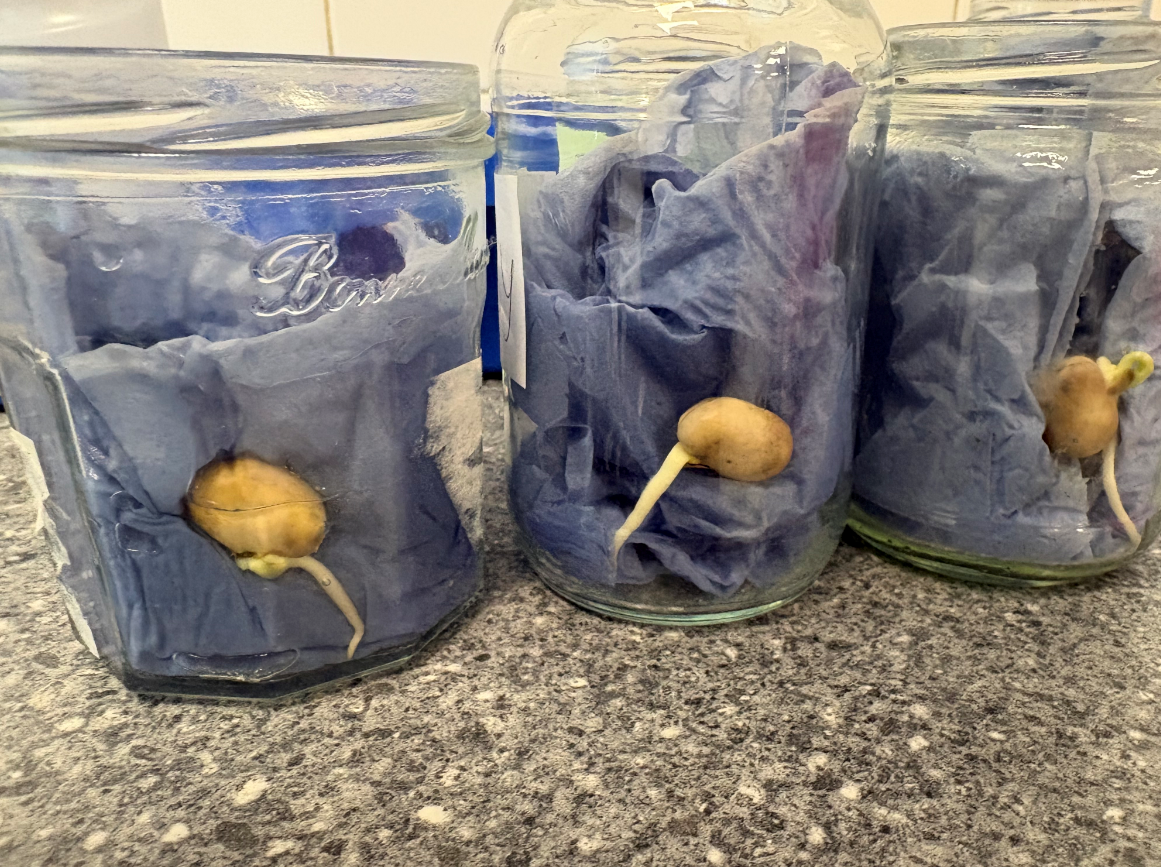
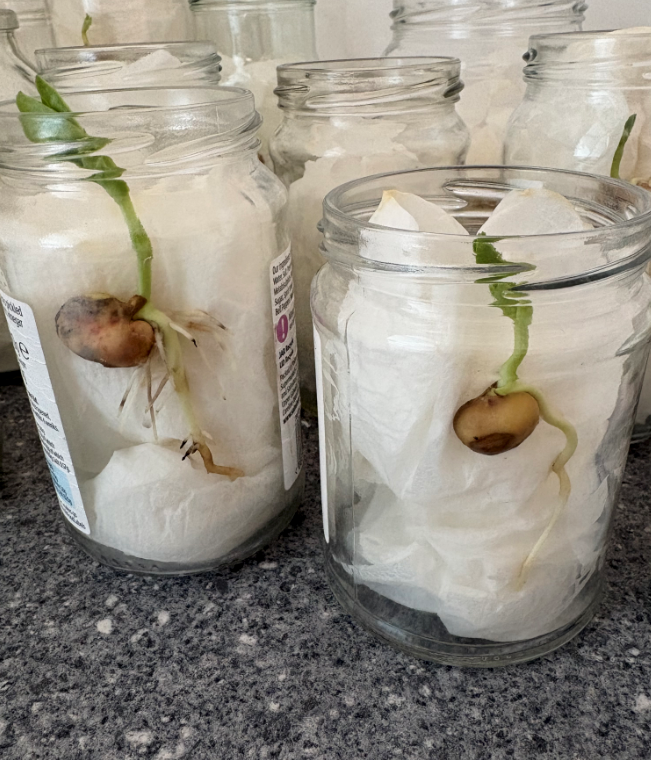
In the following lesson, we used kitchen towel to plant our board bean seeds in a jar and we’re very excited to see these beginning to germinate.
History
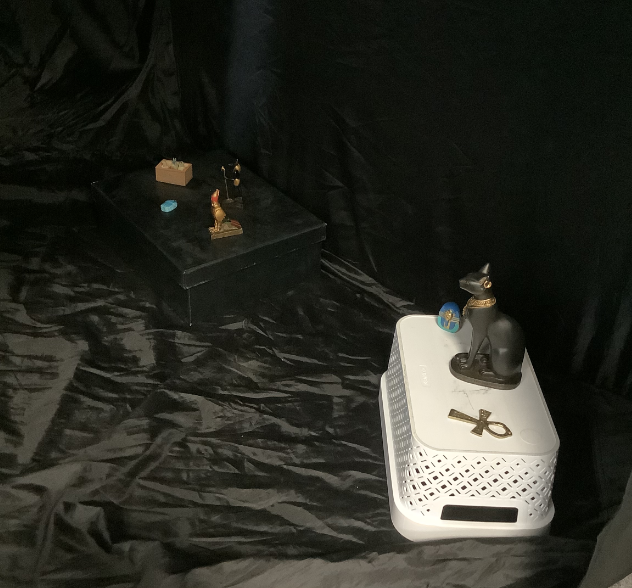
We had a very exciting lesson where we arrived in the classroom to find a tent. Inside the tent, were a range of artefacts. In our groups, we took it in turns to go inside the tent, study the artefacts and choose one to describe to our group. The rest of our group then had to have a go at drawing the artefact we described. At the end of the lesson, we found out these were all replicas of the artefacts discovered in Tutankhamun’s tomb. We also learnt about the local links to this significant discovery. We learnt about Lord Carnarvon, Highclere Castle and Beacon Hill.
French
Year 3 have started a new topic this half-term, all about pets! They have learnt some key noun vocabulary, remembering to say if each animal is masculine (un/ le) or feminine (une/ la.) The classes have learnt how to ask and answer the question “Do you have a pet?” in French and they know how to make a sentence negative (“No, I do not have a pet”.) Some children are now able to put their number and colour knowledge into this topic and talk about how many pets they have and what they look like. A highlight of this learning has been the class survey, where the children were able to ask people in their class about what pets they had at home. This required skilful listening and some children challenged themselves to write the answers in French. Bravo! Key phonics needed during this topic have been: “ai” (j’ai), “oi” (un poisson), “ch” (un chat), “in” (un lapin), silent “h” (un hamster), “ien” (un chien), and silent consonants at the end of words.
Summer 1, 2026
Update 1:
Geography
We’ve learnt about the River Nile in Geography, how it flows from south to north, and that most Egyptian cities are located along the Nile Valley where the land is fertile for farming, because much of the surrounding area is desert. This shows that Egypt is largely made up of desert, with a major river running through it that supports life. As a result, Egypt can be broadly divided into Freshwater Biome and The Desert Biome.
History
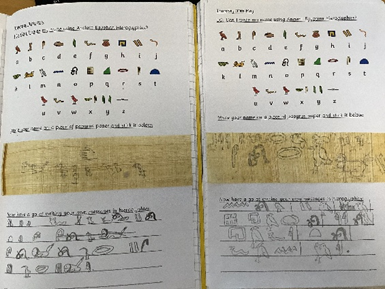
In History, we have looked at a timeline of Ancient Egypt, hieroglyphics and pyramids, including Great Pyramid of Giza. We learnt about why pyramids were built and that they were made of limestone.
English
In English, we have been reading a text called ‘Secrets of a Sun King’. After finding out about a gruesome discovery of feet found on a hearth rug, we wrote our own newspaper article about this event. We enjoyed looking at First News newspapers to understand the features of this style of writing.
PE
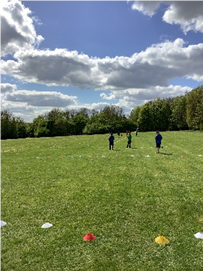
In dance, we are enjoying following a set routine, imagining we are exploring a pyramid and then we are choreographing the next part by miming scenes from Ancient Egyptian life.
Our outdoor PE lessons have focused on developing our running skills, including relay.
French
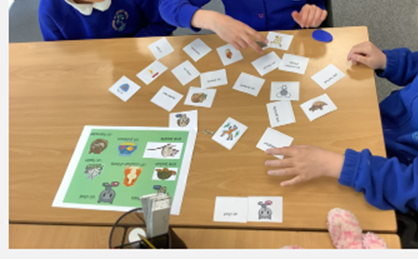
Year 3 have started a new topic this half-term, all about pets! They have learnt some key noun vocabulary, remembering to say if each animal is masculine (un/ le) or feminine (une/ la.) The classes have learnt how to ask and answer the question “Do you have a pet?” in French and they know how to make a sentence negative (“No, I do not have a pet”.) Some children are now able to put their number and colour knowledge into this topic and talk about how many pets they have and what they look like. We have also re-visited giving our opinions and can say which pets we like or dislike. A highlight of this learning has been the class survey, where the children were able to ask people in their class about what pets they had at home. This required skilful listening and some children challenged themselves to write the answers in French. Bravo! Key phonics needed during this topic have been: “ai” (j’ai), “oi” (un poisson), “ch” (un chat), “in” (un lapin), silent “h” (un hamster), “ien” (un chien), and silent consonants at the end of words.
Update 2:
English:
We have continued with the text: The Secrets of the Sun King. As we read more of the text, we began to make links to Ancient Egypt and curses and we made connections between the characters. Following this, we began to write a narrative imagining we were the main character Lil who was going to visit her poorly Grandad in hospital. We thought carefully about the feelings of the character, how the hospital would look and smell, using sensory language, and how Grandad would look. We will be continuing with this after half term but the pieces of writing the children have created so far are OUTSTANDING!
History:
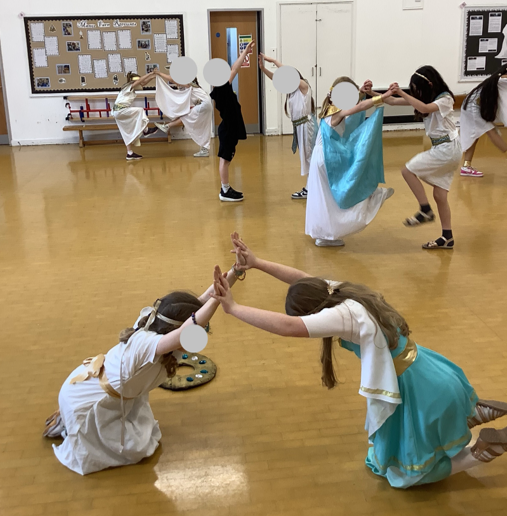
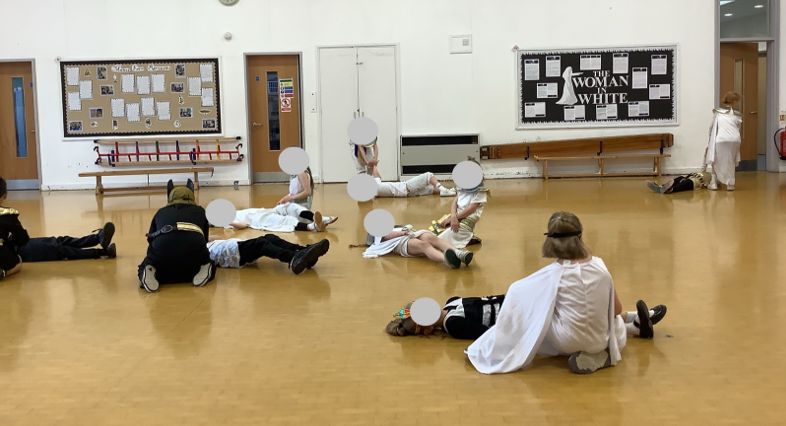
A highlight from this half term was our Ancient Egyptian Workshop with James. We spent the day dressed as Ancient Egyptians, Gods and Mummies. We learned about the discovery of Tutankhamun’s tomb, Howard Carter’s discoveries and what an Egyptian burial might look like. In class we have been learning about the mummification process and we even mummified our own tomatoes to investigate how Ancient Egyptians preserved their pharaohs.
Art:
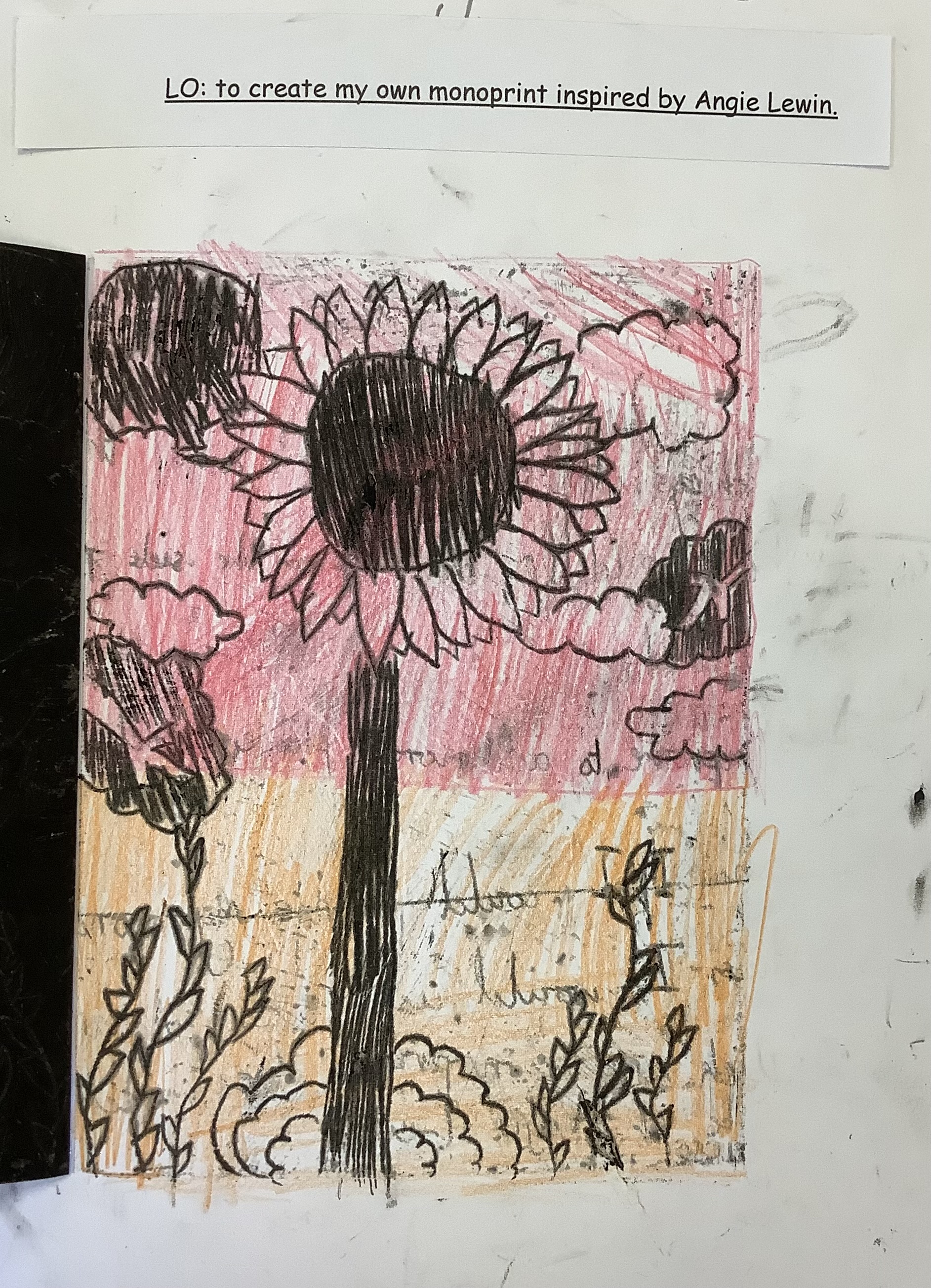
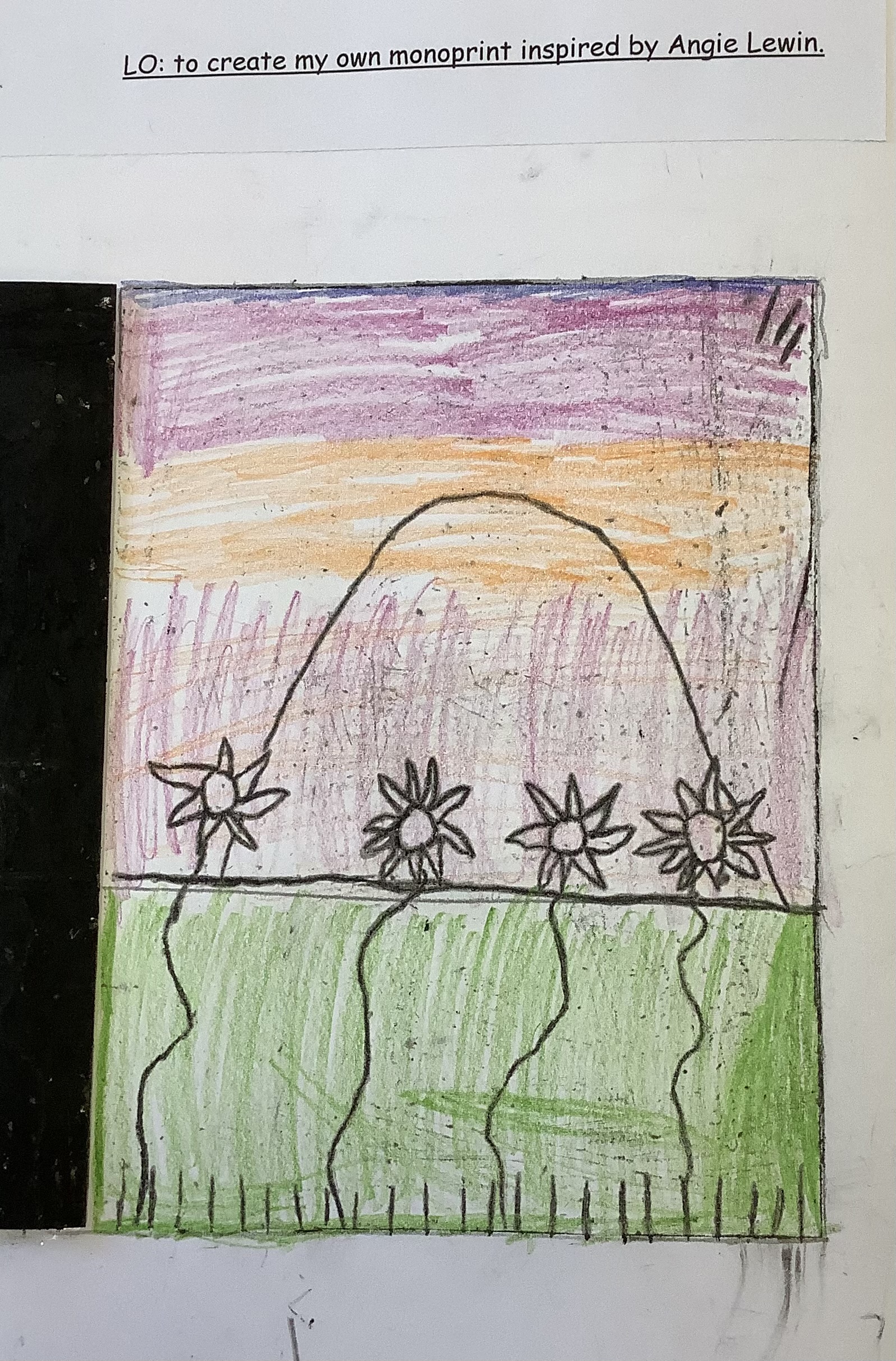
In art this half term, we explored Angie Lewin and her art work. We analysed her artwork, had a go at creating a monoprint of her work and then we designed and printed our own monoprint using colouring pencils, oil pastels and biro. Our design had to be inspired by nature, to follow the style of Angie Lewin’s artwork.
Maths:
In maths, we continued our learning on mass and capacity and then moved on to learning about fractions to explore fractions as part of a whole, adding and subtracting fractions and finding fractions of an amount, where we had to apply our multiplication and division skills. Next, we moved onto money to develop our understanding of different coins and notes and how to find change when paying for amounts. During this, we applied our addition and subtraction skills to add and subtract amounts.
Spring 2, 2026
English
This half term in English, we have been exploring The Tin Forest by Helen Ward, to understand how an author shows transformation throughout a story using negative and positive language alongside colour and illustration. We have used literacy devices such as expanded noun phrases, fronted adverbials and prepositional phrases to create our own version of The Tin Forest matching our sentences to its illustrations. We have been really impressed with the powerful writing the children have produced so far!
Geography
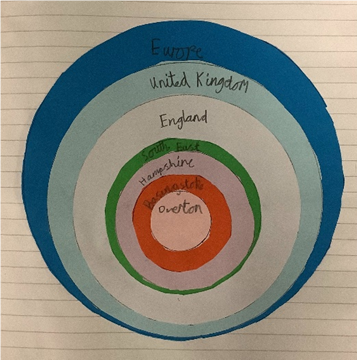
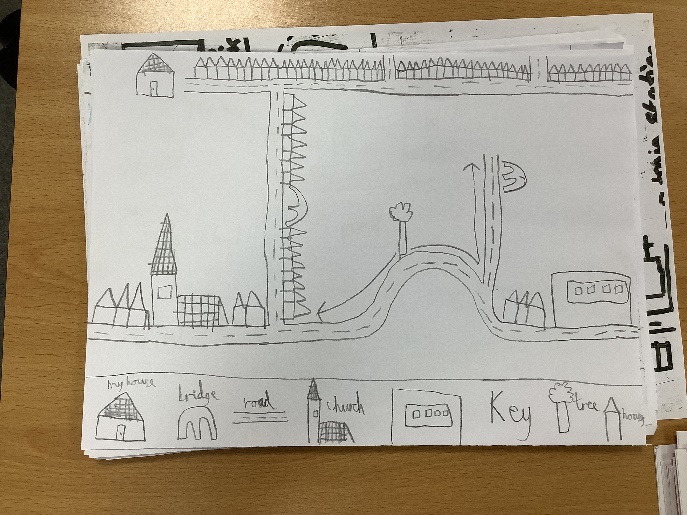
Our Geography lessons this half term have been all about our local study of Overton. First, we found Overton on Google Maps and zoomed out to discover the nearest town, then what county, country, and continent we live in. To help us visualise and understand this we created our own circle maps. To help us to further our geography knowledge, we were asked to draw a map of our route to school. This needed to include physical and human features that we pass on our way to school such as a church, river, traffic lights, fields and shops.
PE
During our games lessons, we have enjoyed developing our racket and ball skills to play tennis. Our main focus has been on direction and ensuring we have appropriate grip of the tennis racket.
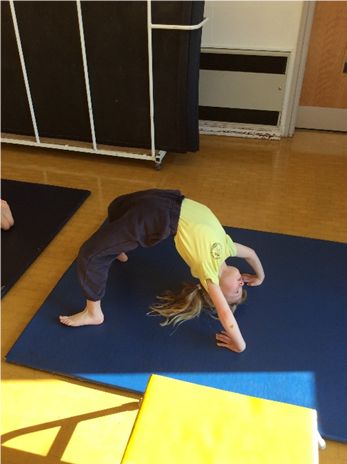
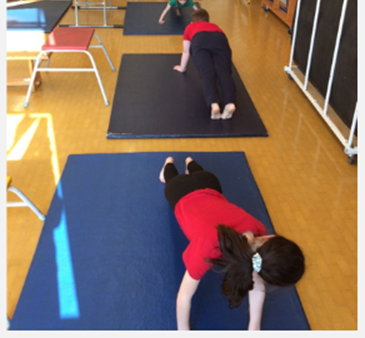
In gymnastics, we have worked in groups to perform a routine involving equipment and key gymnastic balances previously learned. Some of us have had to overcome our fear of heights to jump off the higher boxes.
French
Year 3 have enjoyed a varied series of lessons this half term, starting with World Book Day. On this day, the children had the opportunity to access a wide selection of books, either written in French or all about France! They enjoyed familiar stories, like ‘The Hungry Caterpillar’ and ‘We’re going on a Bear Hunt’ and were able to pick out several words we have already learnt. We have started to learn our colours in French and most children are able to recognise key French phonics and spellings to help us in our learning. Phonics that have been useful this half-term, have been ‘eu’ (bleu), ‘oi’ (noir) and ‘an’ (blanc et orange)…and of course, all those silent letters at the end of words (vert, violet)!
Spring 1, 2026
Update 1
Maths
Over the last few weeks, we have been working hard with multiplication and division using arrays, grouping and sharing before applying this to the written methods of expanded multiplication and short division. Perhaps you could ask your child to show and explain this method to you. We have posted some practice questions on Google Classrooms.
English
This half term in English, we have dived into the fictional world of James Reeves and his Prefabulous Animiles. We studied his poem The Hippocrump and how his clever techniques and features caught our attention as readers. We looked at his use of onomatopoeia, italics for expression and the rhythm and rhyming couplets he’d used. We described and discussed the Hippocrump’s unusual features and the clever combination of different animals James Reeves had used to create his prefabulous animile. We designed our very own prefabulous animile and wrote a poem in the style of James Reeves to bring our creations to life. The children showed great enthusiasm and passion during the writing process and produced some wonderful poems!

Outdoor Learning
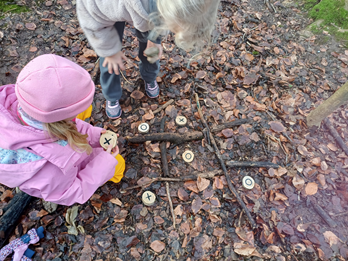
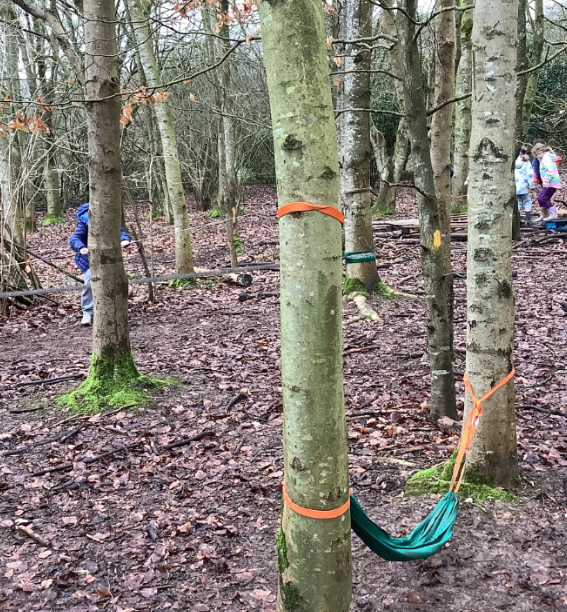
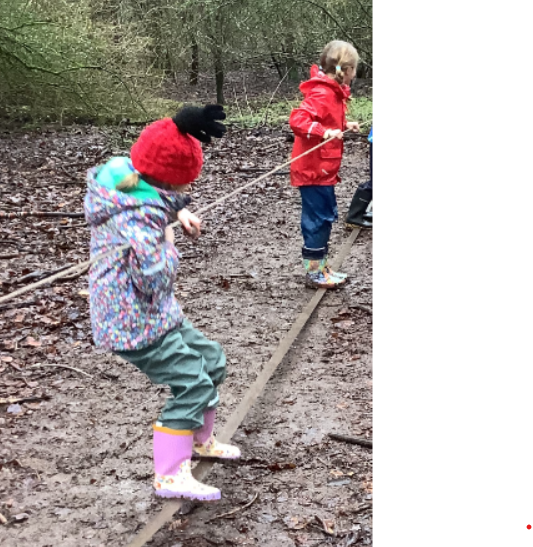
This half term, we have had the opportunity to do outdoor learning with Mr Butler and Mrs Luckhurst. We are really enjoying taking part in this each week. To explore our outdoor area, we can: climb trees, build dens and swings, relax in a hammock, make outdoor art and play on a slackline.
Update 2:
Science
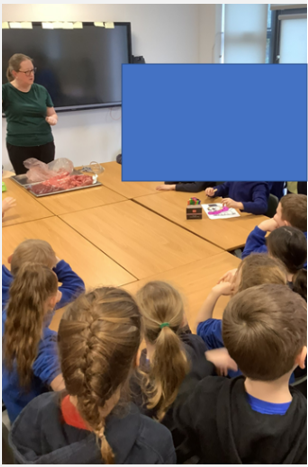
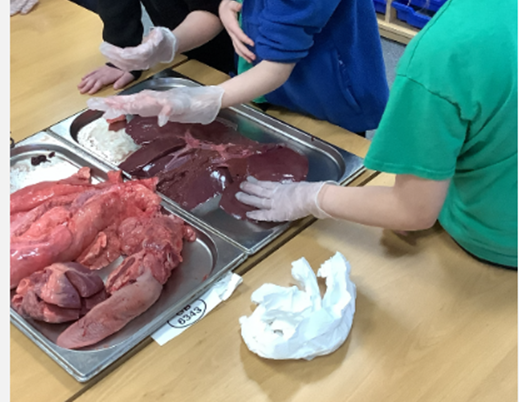
In science, we have been exploring the human body. The highlight was dissecting a Pig’s Pluck (the trachea, lungs, heart and liver). This lesson was an amazing opportunity to see what the vital organs look and feel like and to understand their function.
DT
In DT, we have made a healthy soup. To help us understand what soup tastes like and the different ingredients used to make it, we taste-tested a range of soups. Many of us discovered a new-found love for soup, especially tomato soup!
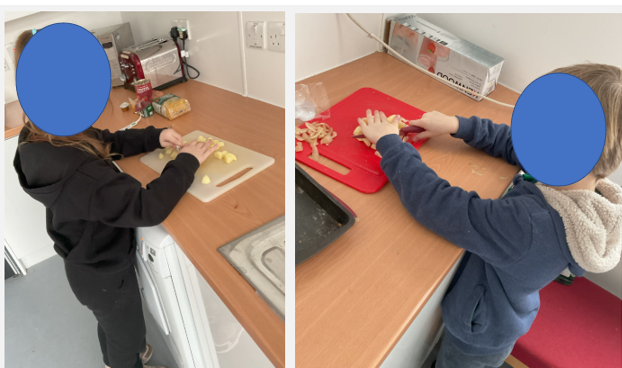
Following on from taste testing soups, we voted on the ingredients we wanted to include in our own class soup and designed this. Then, we got to work in groups to prepare and cook our own soup. When it came to tasting our product, we were divided in our opinions- some loved it and some not so much.
Art
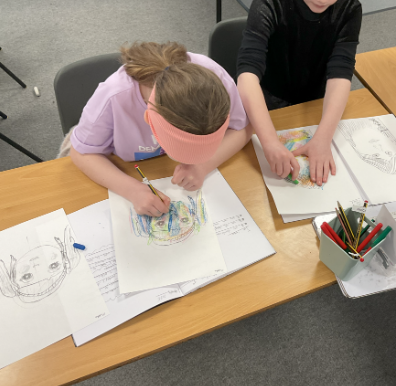
Self-portraits have been the focus of our art this half term. Firstly, we looked carefully at the proportions of our facial features and drew a sketch of ourselves. Next, we explored the self-taught artist Jon Cooper. We unpicked the moods of his portraits and the mediums and effects he’d used to create these. Next, we had a go at using different mediums to recreate the effects and moods shown within his portraits.
Outdoor learning
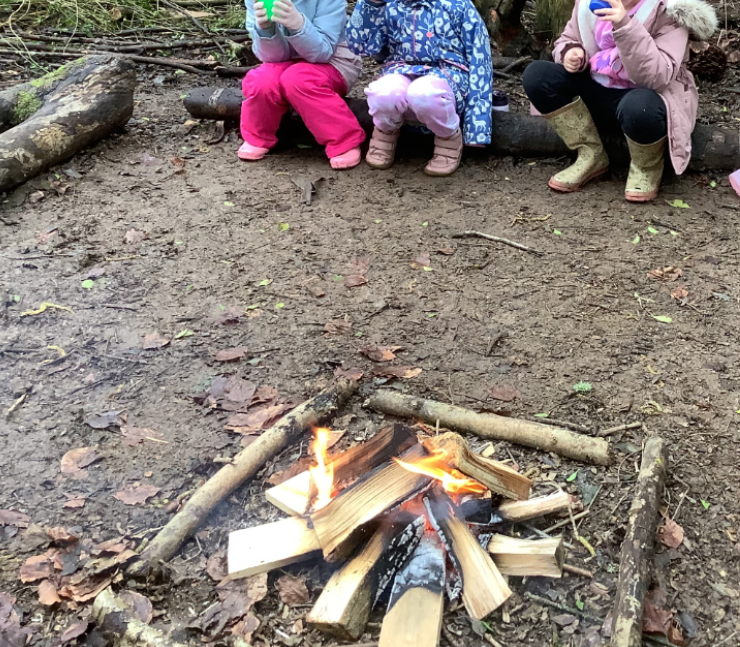
We’ve now finished our half term block of outdoor learning, ending with hot chocolate around the fire.
French
Year 3 have spent some time exploring numbers up to 20…with some children working out the pattern beyond! Most children are now confident with the sound/spelling patterns that help us with these pronunciations.The year group have learnt how to talk about plural nouns withing the verb ‘avoir’ and how to ask the question, “Tu as combien de….” (how many…. do you have?) In addition, we have had fun talking about our opinions of different fruits in French, using four key opinion verb phrases. In our language learning, we have focused mainly on the following French phonics: more silent letters, ‘ei’, ‘in’’, ‘qu’, ‘x’ and ‘z/s’.
Autumn 2, 2025
Update 1
Maths
Over the last few weeks, we have been mastering the column method of addition and subtraction. Firstly, we used the place value counters to help us understand exchanging, before we then applied this to the written methods. Perhaps you could ask your child to show and explain this method to you!
History
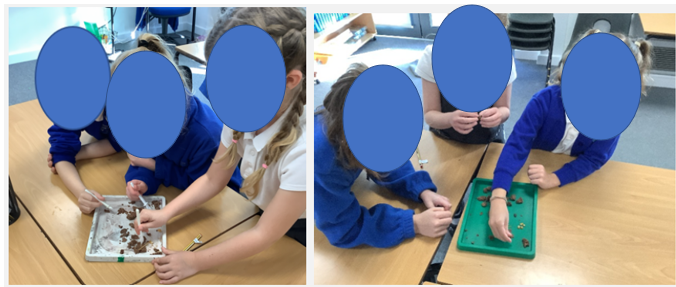
We have had a very exciting history lessons this half term. We had to dissect a sample of Stone Age poo to find out more about the food people age during the Stone Age! We found evidence of corn, fish bones, plants, fruit and seeds.
Art
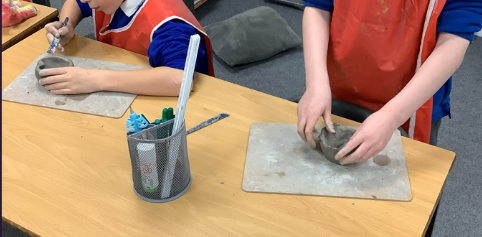
Following on from our RE last half term, learning about the festival of Diwali, we designed and created our own Diya pots from clay and decorated them in authentic patterns.
Computing
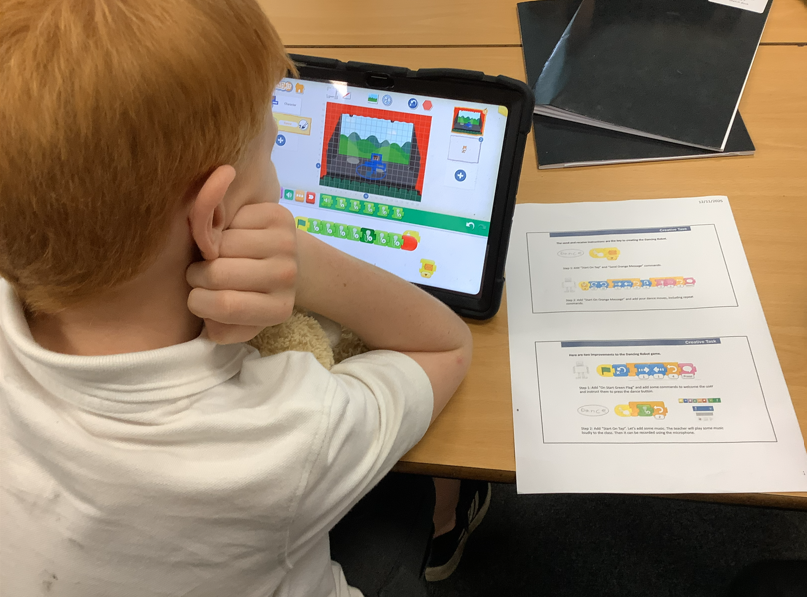
To start the half term, we had an exciting computing day where we learnt about coding and how this can be used to create a game. Firstly, we played on the game LightBot to understand commands and debugging. Then, we used Scratch to design and create our own dancing robot.
Update 2
English
Our most recent English unit has been driven by the text Iron Man by Ted Hughes. The children enjoyed reading about this strange, iron character who came crashing down a cliff! After we’d unpicked the text, the children wrote their own recount by pretending they were one of the seagulls who witnessed this event. The children were fantastic at unpicking the language features of the text by noticing similes, short sentences, powerful verbs and personification. Even more impressive, they then used these literary devices in their own writing- they were a joy to read!
Stone Age Day
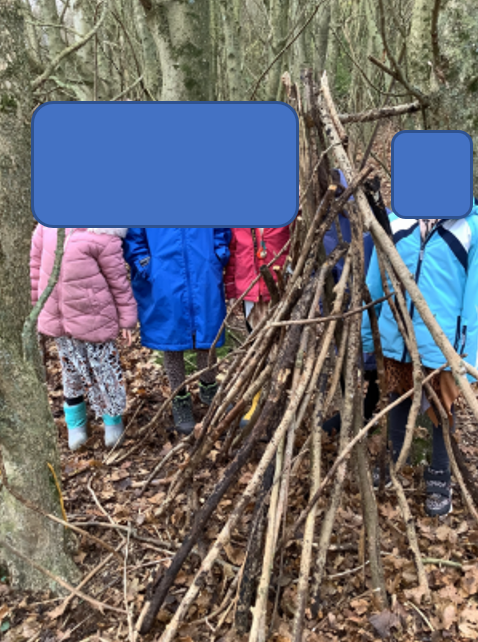
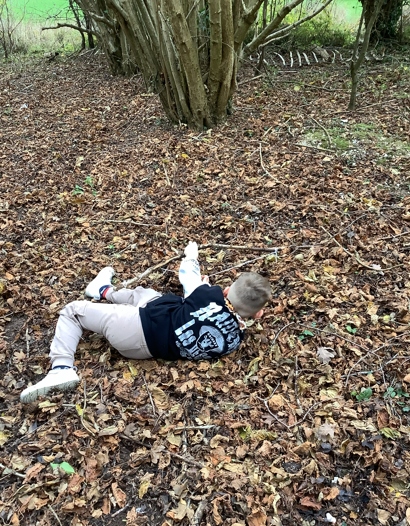
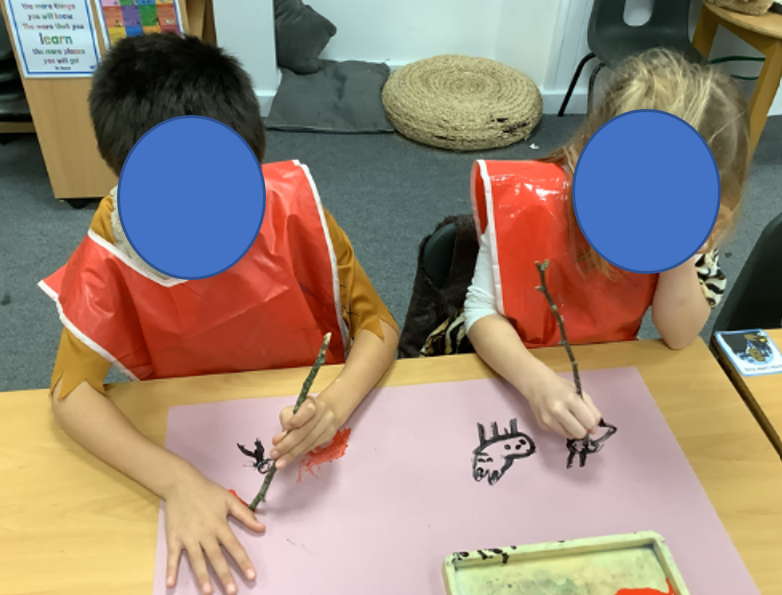
The greatest highlight of this half term was our Stone Age Day! The children looked fantastic in their costumes and fully immersed themselves in the activities. They built a shelter; made their own bow and arrow to hunt with; used sticks to create a cave painting; and researched some of the prehistoric animals they would have encountered if they lived during this time.
Most impressive were the projects that the children brought into school on this day! Adults in school were so impressed with the time and effort they’d put into these! A huge well done to the children for creating these and to parents for facilitating this- thank you.
Art
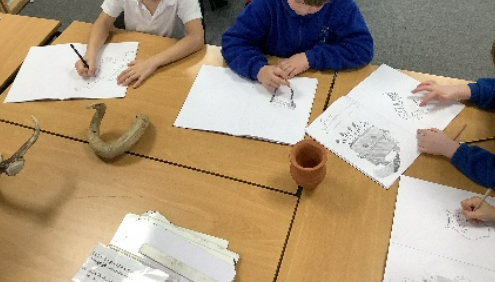
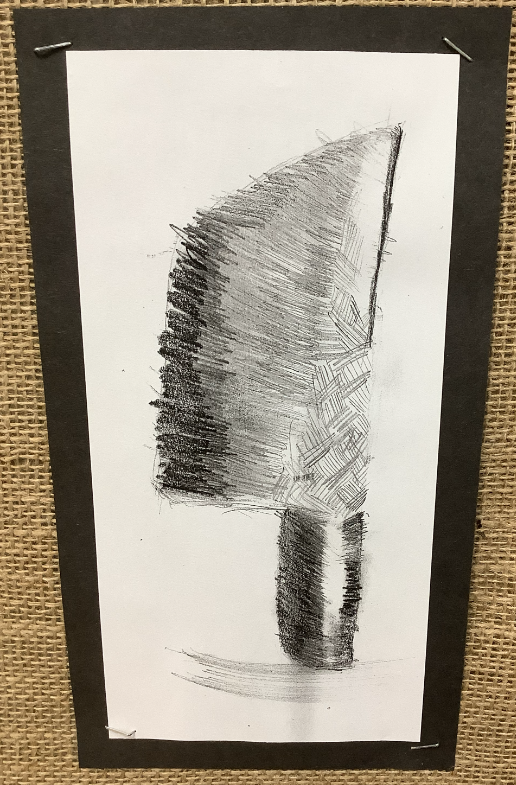
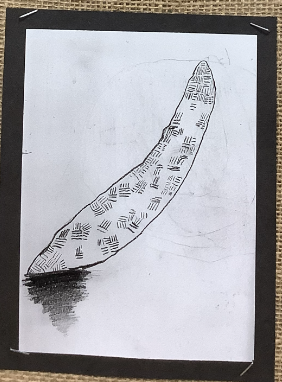
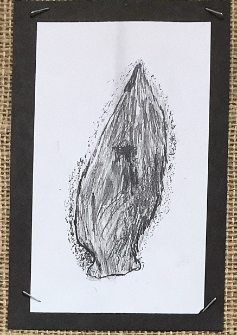
In Art, we have been learning about the different grades of sketching pencils, how to effectively use a range of shading techniques and how to combine these with contour drawing.
To produce our observational drawings and paintings, we chose a Stone Age artefact and began by forming the contour with our sketching pencil. Then, we added texture and tone using shading techniques. To help us understand how to develop our observational drawing skills, we studied an Italian painter called Giorgio Morandi who specialised in still life.
French
Year 3 started this half-term by learning the days of the week in French and understanding that the French do not use capital letters for these words, unlike English. We have consolidated out knowledge of numbers 1-12 and are now getting more confident with the unusual spelling/ sound links. We have played lots of games; bingo, pair matching and number tennis, to name a few! Year 3 enjoyed taking part in their first KS2 MFL Day, in which the upper school explored how we communicate with each other through spoken, signed and sung languages; many of them encountered ‘Junior Eurovision’ for the first time and are hooked! In our language learning, we have focused mainly on the following French phonics: more silent letters, ‘i/y’, ‘ch’, ‘un’, ‘u’, ‘r/rr’ and ‘ai’.
Autumn 1, 2025
Update 1
English
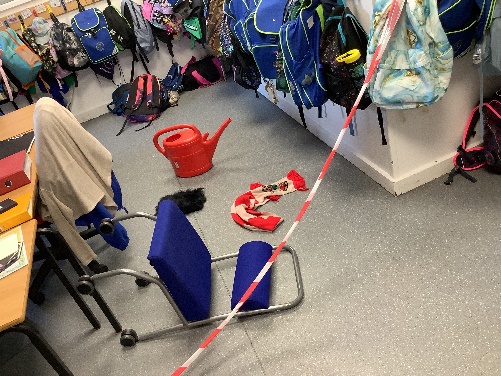
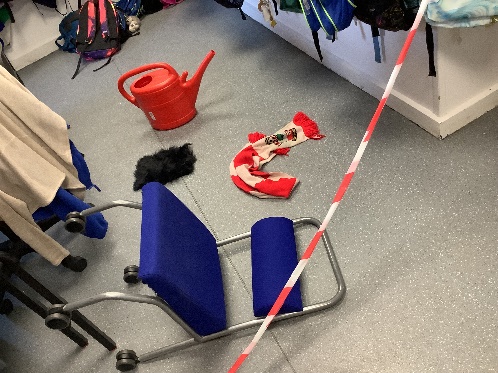
On our first day in Year 3, we arrived back from break time to discover something had been in our Year 3 area. We had to piece together the clues that were left behind to think about who it might have been.
We discovered it was the beast from the text The Lonely Beast. We read the beginning of this story, which was about a beast who wanted to find more of his kind so he went on adventure to find them. However, when he arrived in the city, everyone ran away. Then we wrote a diary entry either from the perspective of the beast or from the viewpoint of one of the people in the city. Some of our work will be going up on display around the school.
History
Our history lessons have begun to help us to learn about the Stone Age. We have looked at historical events on a timeline, explored the role of an archaeologist and why help us understand prehistorical events.
Science
We loved learning about rocks! We explored the properties of rocks, learnt to identify some common types of rock and learnt how rocks are formed. We then conducted an experiment to decided which was the best type of rock to make a Stone Age weapon. We identified we needed a rock that was strong but not too strong so that it could be carved into a weapon.
Skills Progression Day
For skills progression day, we enjoyed developing our team work skills to work together on a range of activities involving throwing. We saw lots of children encouraging each other on and ensuring they took turns to have a go.
Update 2
English
Our second English unit this half term linked into our history topic of the Stone Age to the Iron Age. We looked at the features of non-fiction texts and carried out our own research about weapons/tools to create our own information text. We will be copying up our work and presenting it in the style of a non-fiction text after the half term break.
Maths
This half term has focused on developing our understanding of number. We have looked at the place value of 3-digit numbers and worked on improving our mental calculation with 3-digit numbers. After half term, we will introduce the formal written method of addition and subtraction.
RE
In RE next week, we will be learning about Diwali. We will explore how Diwali is celebrated and we will listen to one of the traditional legends about Rama and Sita.
History
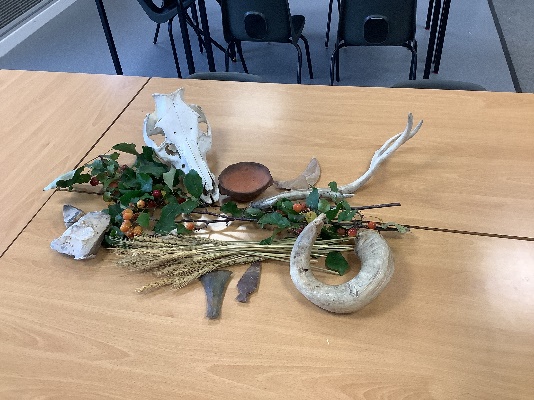
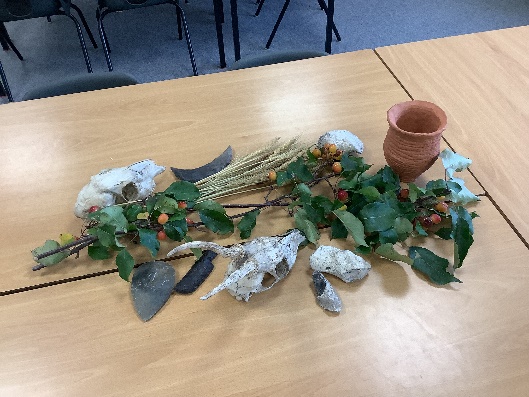
In one lesson, we had a range of pre-historic artefacts on our tables to make sketches of and to piece together the clues to predict what they might be used for and who might have used them.
PE
Orienteering this half term has been enjoyed by all. We began by learning about the different orienteering symbols used on maps and how to read the map key. Map orientation was the next important skill we learnt, understanding that we need to orientate the map and recognise the ‘bird’s eye view’ diagram of the ground. Each week a different task was set up for us to complete using our orienteering skills; for example, creating silly faces accurately using symbols and equipment, matching the symbols to their word in a race with other teams and orientating across a pitch of cones to solve the answer.
Butser Ancient Farm
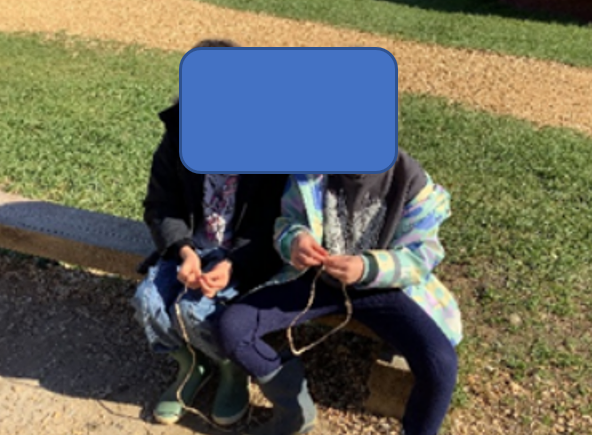
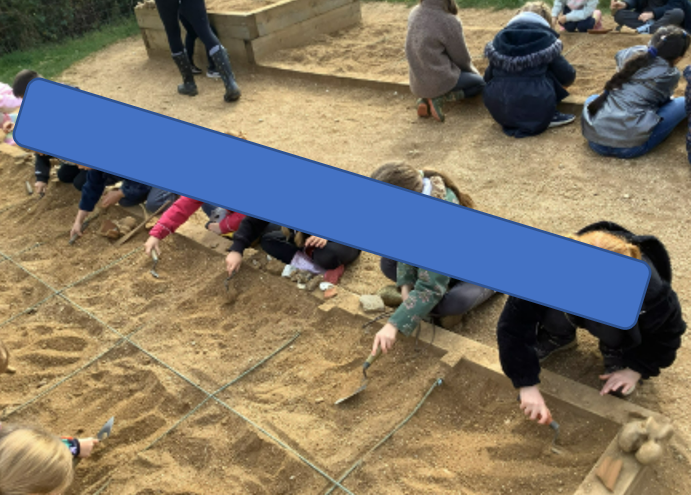
A highlight of this half term was our trip to Butser Ancient Farm - we had lots of fun! We took part in a range of activities which involved learning about how to start a fire, taking part in an archaeological excavation and having a tour of pre-historic houses.
French
Year 3 have had a fantastic start to their KS2 French learning this half term. We first collated our knowledge about France and the French language – quite a lot of knowledge about food, Paris and the Eiffel Tower! The children have learnt various forms of greetings and how to ask and answer the question, “Comment ça va?” with a range of responses. They can now ask and answer the question “Comment t’appelles-tu?” and are starting to work on their number knowledge from 1-12. We have had fun exploring several songs and ‘Claude’ the puppet has been in class to help us on some occasions. In our learning, we have focused mainly on the following French phonics: silent letters, a, ç/s/ss, en/ant/am/em, i/y, eu, and c/k/q/qu.